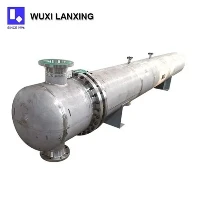
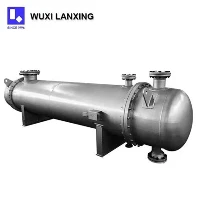
Shell and tube exchangers are a common sight in many industrial settings, but can they be used in offshore applications? As a supplier of shell and tube exchangers, I've had my fair share of questions about their suitability for offshore use. In this blog post, I'll dive into the details and explore whether these heat exchangers are a good fit for the unique challenges of offshore environments.
Understanding Shell and Tube Exchangers
Before we get into the offshore aspect, let's quickly go over what shell and tube exchangers are. They're basically a type of heat exchanger that consists of a shell (a large vessel) and a bundle of tubes. One fluid flows through the tubes, while the other flows around the tubes in the shell. This setup allows for efficient heat transfer between the two fluids.
There are different types of shell and tube exchangers, like Fixed Tube Sheet Heat Exchanger, which has tubes fixed at both ends to tube sheets. Then there's the U-tube heat exchanger, which is part of the Heavy Duty Heat Exchanger category. These exchangers are known for their durability and ability to handle high pressures and temperatures.
Offshore Challenges
Offshore applications come with a whole set of challenges that are different from onshore ones. First off, there's the harsh marine environment. Saltwater is highly corrosive, and it can quickly eat away at the materials of a heat exchanger if they're not properly protected. The constant exposure to salt spray, high humidity, and strong winds also adds to the wear and tear.
Another challenge is the limited space on offshore platforms. Every piece of equipment needs to be compact and efficient. Shell and tube exchangers need to be designed in a way that they can fit into the available space without sacrificing performance.
Then there's the issue of maintenance. It's not as easy to access and service equipment on an offshore platform as it is on land. Any maintenance or repair work requires specialized equipment and trained personnel, which can be costly and time-consuming.
Suitability of Shell and Tube Exchangers for Offshore Use
Despite these challenges, shell and tube exchangers can be used in offshore applications, and they actually have several advantages.


Corrosion Resistance
One of the key factors in making shell and tube exchangers suitable for offshore use is the choice of materials. We use corrosion-resistant materials like stainless steel, titanium, and nickel alloys. These materials can withstand the corrosive effects of saltwater and other harsh chemicals commonly found in offshore environments. For example, titanium is known for its excellent corrosion resistance, even in highly acidic or alkaline conditions.
High Efficiency
Shell and tube exchangers are known for their high heat transfer efficiency. This is crucial in offshore applications where energy efficiency is a top priority. They can transfer a large amount of heat in a relatively small space, which is ideal for the limited space available on offshore platforms.
Customization
We can customize shell and tube exchangers to meet the specific requirements of offshore applications. Whether it's the size, shape, or the type of materials used, we can design an exchanger that fits perfectly into the offshore setup. For example, we can design a Tubular Heat Exchanger with a compact design to save space on the platform.
Applications in Offshore Industries
Shell and tube exchangers have a wide range of applications in offshore industries.
Oil and Gas
In the oil and gas industry, shell and tube exchangers are used for various purposes. They're used in oil cooling, where they help to maintain the temperature of the oil during the production and processing stages. Our Oil Cooling Heat Exchanger is specifically designed to handle the high temperatures and pressures associated with oil production. They're also used in gas processing, where they help to cool and condense the gas.
Chemical Processing
Offshore chemical processing plants also rely on shell and tube exchangers. They're used in processes like distillation, where they help to separate different components of a chemical mixture. Our Chemical Tower is often used in conjunction with shell and tube exchangers to optimize the chemical processing operations.
Maintenance and Monitoring
To ensure the long-term performance of shell and tube exchangers in offshore applications, proper maintenance and monitoring are essential. We recommend regular inspections to check for any signs of corrosion, leaks, or other damage. We also offer remote monitoring services, which allow us to keep an eye on the performance of the exchangers in real-time. This helps us to detect any potential issues early and take corrective action before they become major problems.
Conclusion
So, can shell and tube exchangers be used in offshore applications? The answer is a resounding yes. With the right materials, design, and maintenance, these heat exchangers can handle the unique challenges of offshore environments and provide reliable performance. If you're in the market for a shell and tube exchanger for your offshore project, don't hesitate to reach out. We're here to help you find the right solution for your needs.