In the world of industrial machinery and automotive applications, oil cooler heat exchangers play a crucial role in maintaining optimal operating temperatures. As a leading supplier of Oil Cooler Heat Exchangers, I've witnessed firsthand the diverse factors that can significantly impact their performance. Understanding these factors is essential for ensuring the efficient and reliable operation of any system that relies on these heat exchangers.
1. Fluid Properties
The properties of the fluids involved, namely the oil and the cooling medium (usually water or air), have a profound influence on the performance of an oil cooler heat exchanger.
Oil Viscosity
Viscosity is a measure of a fluid's resistance to flow. High - viscosity oils flow more slowly, which can lead to reduced heat transfer rates. When oil is thick, it forms a thicker boundary layer on the heat transfer surfaces, impeding the transfer of heat from the oil to the cooling medium. For instance, in cold environments, some oils may become extremely viscous, causing the heat exchanger to work less efficiently. To counter this, pre - heating the oil or using low - viscosity oils in cold conditions can improve the performance of the heat exchanger.
Oil Specific Heat
The specific heat of a fluid is the amount of heat required to raise the temperature of a unit mass of the fluid by one degree. Oils with higher specific heat capacities can absorb more heat without a significant increase in temperature. This means that a heat exchanger dealing with an oil having a high specific heat can transfer more heat per unit of oil flow. When selecting an oil cooler heat exchanger, considering the specific heat of the oil is crucial for sizing the exchanger appropriately.
Cooling Medium Properties
For water - cooled heat exchangers, the temperature and hardness of the water can affect performance. Cold water is more effective at removing heat from the oil. However, if the water is too cold, there is a risk of condensation forming on the heat exchanger surfaces, which can lead to corrosion. Hard water contains minerals such as calcium and magnesium, which can form scale deposits on the heat transfer surfaces over time. These deposits act as insulators, reducing the heat transfer efficiency. In air - cooled heat exchangers, the air temperature, humidity, and velocity are important factors. High - temperature air is less effective at cooling the oil, and high humidity can also affect the heat transfer process.
2. Heat Exchanger Design
The design of the oil cooler heat exchanger is another critical factor that affects its performance.
Type of Heat Exchanger
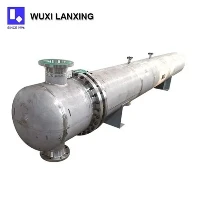
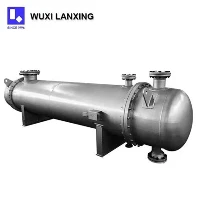
There are several types of oil cooler heat exchangers, such as plate heat exchangers, shell and tube heat exchangers, and finned - tube heat exchangers. Shell and Tube Heat Exchanger are a popular choice due to their simplicity, robustness, and ability to handle high pressures and temperatures. They consist of a bundle of tubes enclosed in a shell. The oil flows through the tubes, while the cooling medium flows through the shell. The large surface area provided by the tubes allows for efficient heat transfer.


Surface Area
The greater the surface area available for heat transfer, the more heat can be transferred between the oil and the cooling medium. Heat exchangers with a larger number of tubes or more fins (in the case of finned - tube heat exchangers) have a higher surface area. For example, a Steel Shell and Tube Heat Exchanger can be designed with a sufficient number of tubes to ensure an adequate surface area for efficient heat transfer.
Flow Arrangement
The flow arrangement of the oil and the cooling medium can be parallel flow, counter - flow, or cross - flow. In parallel flow, both fluids enter the heat exchanger at the same end and flow in the same direction. In counter - flow, the fluids enter at opposite ends and flow in opposite directions. Counter - flow arrangement generally provides a more efficient heat transfer because the temperature difference between the two fluids remains relatively constant along the length of the heat exchanger. Cross - flow arrangements are common in air - cooled heat exchangers and have their own unique heat transfer characteristics.
3. Operating Conditions
The operating conditions under which the oil cooler heat exchanger operates can also impact its performance.
Flow Rates
The flow rates of the oil and the cooling medium are crucial. If the oil flow rate is too high, the residence time of the oil in the heat exchanger may be too short, resulting in insufficient heat transfer. On the other hand, if the flow rate is too low, the oil may become over - heated, and the heat transfer rate may also be reduced. Similarly, the cooling medium flow rate needs to be optimized to ensure efficient heat removal. For example, in a Hydraulic Oil Cooler, the correct balancing of the oil and coolant flow rates is essential for maintaining the hydraulic system's temperature within the desired range.
Pressure Drop
Pressure drop occurs as the fluids flow through the heat exchanger. Excessive pressure drop can lead to increased energy consumption for the pumps or fans that circulate the fluids. This can also cause problems in the overall system operation. The design of the heat exchanger, such as the tube diameter, length, and number of bends, can affect the pressure drop. A well - designed heat exchanger should have an acceptable pressure drop while still achieving efficient heat transfer.
Temperature Differential
The temperature difference between the oil and the cooling medium is a driving force for heat transfer. A larger temperature differential generally leads to a higher heat transfer rate. However, in some cases, the temperature of the cooling medium may be limited by external factors. For example, in a hot climate, the available air temperature may be relatively high, reducing the temperature differential and thus the heat transfer efficiency.
4. Maintenance and Fouling
Regular maintenance of the oil cooler heat exchanger is essential for its long - term performance.
Fouling
Fouling refers to the accumulation of unwanted materials on the heat transfer surfaces. This can include dirt, scale, and biological growth. In water - cooled heat exchangers, scale formation due to hard water is a common problem. In air - cooled heat exchangers, dirt and debris can accumulate on the fins, blocking the air flow and reducing the heat transfer efficiency. Fouling acts as an insulating layer, reducing the heat transfer coefficient and increasing the temperature of the oil.
Cleaning
Regular cleaning of the heat exchanger can prevent fouling and maintain its performance. For shell and tube heat exchangers, mechanical cleaning methods such as tube brushing or chemical cleaning can be used to remove scale and deposits. In air - cooled heat exchangers, periodic blowing or washing of the fins can keep them clean.
5. Application - Specific Factors
Different applications may have unique factors that affect the performance of oil cooler heat exchangers.
Automotive Applications
In Oil Cooler For Car applications, the heat exchanger needs to be compact and lightweight while still providing efficient cooling. The engine's operating conditions, such as high - speed driving or stop - and - go traffic, can also impact the heat load on the oil cooler. Additionally, the location of the heat exchanger in the vehicle's engine compartment can affect the air flow around it, which in turn affects its cooling performance.
Industrial Applications
In industrial settings, the heat exchanger may need to handle large volumes of oil and operate continuously for long periods. The presence of contaminants in the oil, such as metal particles or chemicals, can cause wear and corrosion in the heat exchanger. Industrial heat exchangers may also need to comply with specific safety and regulatory standards, such as the PED Shell and Tube Heat Exchanger which adheres to the Pressure Equipment Directive.
As a supplier of Oil Cooler Heat Exchangers, we understand the importance of these factors in ensuring the optimal performance of our products. We offer a wide range of heat exchangers designed to meet the diverse needs of different applications. Whether you are in the automotive, industrial, or any other sector that requires efficient oil cooling, we are here to provide you with the best solutions.
If you are looking for high - quality oil cooler heat exchangers and want to discuss your specific requirements, we invite you to contact us for procurement and further discussions. We are committed to helping you find the most suitable heat exchanger for your needs and ensuring the long - term success of your operations.