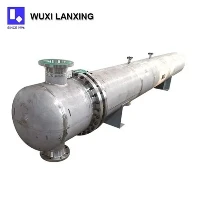
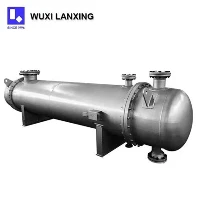
In the realm of heat exchange technology, the PED (Pressure Equipment Directive) Shell and Tube Heat Exchanger stands as a cornerstone. As a leading supplier of PED Shell and Tube Heat Exchangers, I've witnessed firsthand the critical role that baffles play in these devices. Baffles are essential components that significantly enhance the performance of heat exchangers. In this blog post, we'll explore the commonly used types of baffles in PED Shell and Tube Heat Exchangers, their unique characteristics, and their impact on heat transfer efficiency.
Segment Baffles
Segment baffles are perhaps the most widely used type of baffles in PED Shell and Tube Heat Exchangers. They are designed in the form of circular segments that are placed inside the shell at regular intervals. The main function of segment baffles is to direct the flow of the shell - side fluid across the tubes, creating a cross - flow pattern.
This cross - flow pattern increases the fluid velocity and turbulence around the tubes, which in turn enhances the heat transfer coefficient. By forcing the fluid to flow across the tubes rather than parallel to them, segment baffles also increase the contact area between the shell - side fluid and the tubes, promoting more efficient heat exchange.

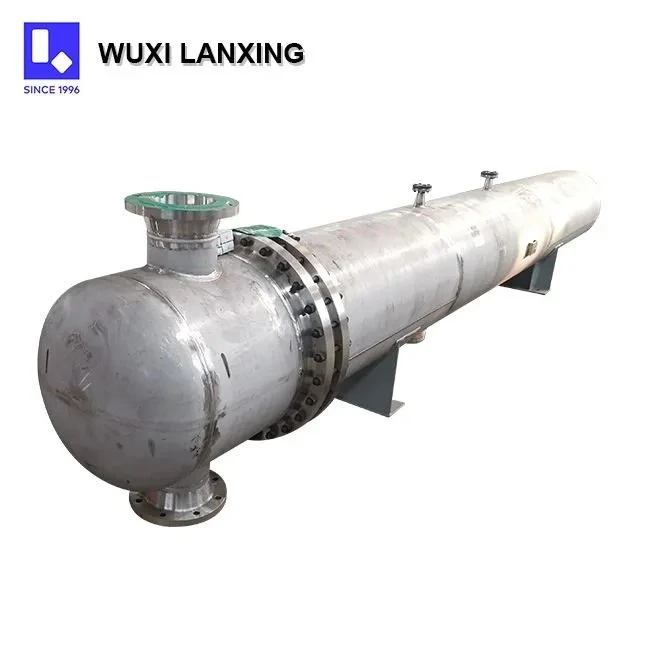
The most common segmental cut is 25%, which means that the segment baffle has a cutout of 25% of its diameter. However, different segmental cuts can be used depending on the specific requirements of the heat exchanger. For example, a larger segmental cut (e.g., 35% or 45%) may be used when a lower pressure drop is required, while a smaller segmental cut can provide a higher heat transfer coefficient at the expense of a higher pressure drop.
One of the advantages of segment baffles is their simplicity and ease of manufacture. They are relatively inexpensive to produce, which makes them a cost - effective option for many heat exchanger applications. Additionally, they can be easily installed and maintained, reducing the overall cost of ownership of the heat exchanger.
Disc and Donut Baffles
Disc and donut baffles consist of alternating disc - shaped and donut - shaped baffles placed inside the shell. The disc baffles are solid discs that are smaller in diameter than the shell, while the donut baffles are rings with a central hole.
The fluid flow pattern created by disc and donut baffles is more complex than that of segment baffles. The fluid flows alternately through the central hole of the donut baffles and around the disc baffles, creating a zig - zag flow path. This flow path increases the fluid residence time in the shell and enhances the turbulence, leading to a higher heat transfer coefficient.
Disc and donut baffles are particularly suitable for applications where a high heat transfer rate is required and the shell - side fluid has a low viscosity. They can also help to reduce fouling on the tube surface by promoting a more uniform flow distribution. However, they are more expensive to manufacture than segment baffles due to their more complex design. Additionally, they may result in a higher pressure drop compared to segment baffles, which needs to be considered when designing the heat exchanger system.
Orifice Baffles
Orifice baffles are circular plates with a series of holes drilled through them. These baffles are placed in the shell of the heat exchanger, and the fluid passes through the holes in the orifice plates.
The main advantage of orifice baffles is that they can create a high degree of turbulence in the shell - side fluid for a relatively low pressure drop. The small holes in the orifice plates cause the fluid to accelerate as it passes through, increasing the Reynolds number and enhancing the heat transfer.
Orifice baffles are often used in applications where the shell - side fluid has a high viscosity or where there is a risk of fouling. The high - velocity jets created by the orifice plates can help to prevent fouling by scouring the tube surfaces. However, orifice baffles may be more difficult to clean compared to segment or disc and donut baffles, and they require careful design to ensure that the pressure drop across the heat exchanger is within acceptable limits.
Helical Baffles
Helical baffles are a relatively new type of baffle design for shell and tube heat exchangers. Instead of the traditional flat - plate baffles, helical baffles are shaped like a helix or a spiral.
The helical shape of the baffles creates a continuous spiral flow path for the shell - side fluid. This flow path reduces the dead zones and back - mixing in the shell, resulting in a more uniform flow distribution and a higher heat transfer efficiency. Compared to other types of baffles, helical baffles can also provide a lower pressure drop, especially at high flow rates.
Helical baffles are particularly beneficial for large - scale heat exchanger applications where energy efficiency is a major concern. They can also improve the mechanical integrity of the heat exchanger by reducing the vibration and erosion caused by the fluid flow. However, the manufacturing process of helical baffles is more complex and expensive, which may limit their widespread use in some applications.
Impact on Heat Exchanger Performance
The choice of baffle type has a significant impact on the performance of the PED Shell and Tube Heat Exchanger. Different baffle types can affect the heat transfer coefficient, pressure drop, and fouling characteristics of the heat exchanger.
A higher heat transfer coefficient means that more heat can be transferred between the two fluids in the heat exchanger, resulting in a more efficient heat exchange process. However, increasing the heat transfer coefficient often comes at the cost of a higher pressure drop. The pressure drop is an important factor to consider because it affects the energy consumption of the pump or compressor used to circulate the fluids in the heat exchanger system.
Fouling is another critical issue in heat exchanger operation. Some baffle types, such as orifice baffles and disc and donut baffles, can help to reduce fouling by promoting a more turbulent flow and preventing the accumulation of deposits on the tube surfaces. On the other hand, the design of the baffle should also allow for easy cleaning to maintain the long - term performance of the heat exchanger.
Our Product Offerings
As a supplier of PED Shell and Tube Heat Exchangers, we offer a wide range of heat exchangers with different types of baffles to meet the diverse needs of our customers. Our Gas Cooling Heat Exchanger is designed to efficiently cool gases using various baffle configurations to ensure optimal heat transfer. The U Tube Heat Exchanger in our product line features a unique U - shaped tube design combined with carefully selected baffles for enhanced performance.
For oil cooling applications, our Shell and Tube Heat Exchanger Used for Oil Cooling is equipped with baffles that are specifically designed to handle the high - viscosity nature of oil and provide efficient heat transfer. In the HVAC field, our HVAC Brazed Plate Heat Exchanger offers a compact and efficient solution, and our Shell and Tube Type Heat Exchanger is suitable for larger - scale HVAC and industrial applications.
Conclusion
The selection of the appropriate baffle type is crucial for the efficient operation of a PED Shell and Tube Heat Exchanger. Each type of baffle - segment, disc and donut, orifice, and helical - has its own unique features, advantages, and limitations. By understanding the characteristics of these baffles, engineers and operators can make informed decisions to optimize the heat exchanger performance, reduce energy consumption, and minimize fouling.
If you are in the market for a PED Shell and Tube Heat Exchanger and need more information about our products or the selection of the right baffle type for your application, we encourage you to contact us for a detailed discussion. Our team of experts is ready to provide you with customized solutions and support to meet your heat exchange needs.