
Finned tube heat exchangers are widely used in various industries due to their high efficiency in transferring heat. As a supplier of finned tube heat exchangers, I understand the importance of improving heat transfer efficiency to meet the diverse needs of our customers. In this blog, I will share some effective methods to enhance the heat transfer efficiency of finned tube heat exchangers.
1. Optimize the Finned Tube Design
The design of finned tubes plays a crucial role in heat transfer efficiency. There are several aspects to consider:
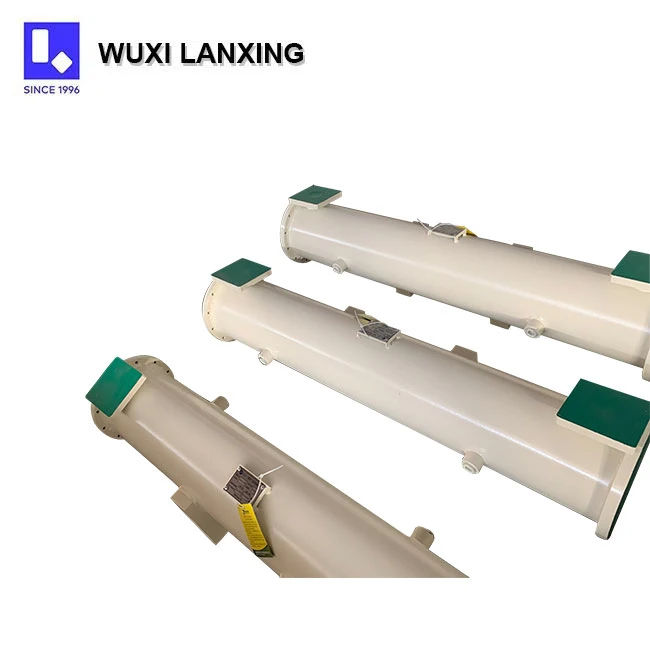

1.1 Fin Geometry
- Fin Shape: Different fin shapes, such as straight fins, wavy fins, and serrated fins, have different heat transfer characteristics. Wavy and serrated fins can disrupt the boundary layer of the fluid flowing over the fins, increasing the turbulence and thus enhancing the heat transfer. For example, serrated fins create vortices that promote better mixing of the fluid, which improves the heat transfer coefficient.
- Fin Density: The number of fins per unit length affects the heat transfer area. A higher fin density means more heat transfer area, but it also increases the flow resistance of the fluid. Therefore, an optimal fin density needs to be determined based on the specific application. If the fluid has a high flow rate, a relatively lower fin density may be more appropriate to avoid excessive pressure drop.
1.2 Tube Material and Dimensions
- Material: The choice of tube material is important as it affects the thermal conductivity. Materials with high thermal conductivity, such as copper and aluminum, are commonly used in finned tube heat exchangers. Copper has excellent thermal conductivity and is suitable for applications where high heat transfer rates are required. Aluminum is lighter and more cost - effective, making it a popular choice for many industrial applications.
- Tube Diameter and Wall Thickness: Smaller tube diameters can increase the surface - to - volume ratio, which is beneficial for heat transfer. However, they also increase the flow resistance. The wall thickness of the tube should be optimized to balance the heat transfer performance and the mechanical strength of the tube.
2. Improve the Fluid Flow Conditions
The flow conditions of the fluids inside and outside the finned tubes have a significant impact on heat transfer efficiency.
2.1 Flow Velocity
- Increasing the Flow Velocity: Higher flow velocities can reduce the thickness of the boundary layer on the tube and fin surfaces, which increases the heat transfer coefficient. However, increasing the flow velocity also increases the pressure drop and energy consumption. Therefore, a trade - off needs to be made between the heat transfer improvement and the energy cost. For example, in a forced - convection heat exchanger, adjusting the fan or pump speed can control the flow velocity.
- Uniform Flow Distribution: Ensuring uniform flow distribution across all the tubes and fins in the heat exchanger is essential. Non - uniform flow can lead to uneven heat transfer and lower overall efficiency. This can be achieved through proper design of the inlet and outlet headers, as well as the use of flow - distribution devices such as baffles.
2.2 Fluid Properties
- Thermal Conductivity: The thermal conductivity of the fluid affects the rate of heat transfer. Fluids with high thermal conductivity, such as water, are better heat transfer media. In some cases, adding heat - transfer additives to the fluid can improve its thermal conductivity.
- Viscosity: Lower - viscosity fluids have lower flow resistance and can flow more easily over the fins and tubes. This helps to maintain a higher flow velocity and improve heat transfer. However, the viscosity of the fluid may be affected by temperature, so it is important to consider the operating temperature range.
3. Enhance the Surface Characteristics
The surface characteristics of the finned tubes can be modified to improve heat transfer efficiency.
3.1 Surface Coating
- Applying a thin coating of materials with high thermal emissivity on the fin and tube surfaces can enhance radiative heat transfer. For example, black chrome coatings can increase the amount of heat radiated from the surface. Additionally, anti - fouling coatings can prevent the accumulation of dirt and scale on the surfaces, which can reduce heat transfer efficiency over time.
3.2 Surface Roughness
- A certain degree of surface roughness can disrupt the boundary layer and increase turbulence, thus enhancing heat transfer. However, excessive roughness can also increase the flow resistance. Therefore, the surface roughness needs to be carefully controlled during the manufacturing process.
4. Use of Advanced Heat Transfer Technologies
In addition to the above - mentioned methods, there are some advanced heat transfer technologies that can be applied to finned tube heat exchangers.
4.1 Nanofluids
- Nanofluids are suspensions of nanoparticles in a base fluid. The addition of nanoparticles can significantly improve the thermal conductivity of the fluid. For example, adding copper or aluminum oxide nanoparticles to water can enhance the heat transfer performance of the finned tube heat exchanger. However, the stability of nanofluids and the potential impact on the heat exchanger components need to be carefully studied.
4.2 Phase - Change Materials
- Phase - change materials (PCMs) can absorb or release a large amount of heat during the phase - change process. Incorporating PCMs into the finned tube heat exchanger can increase the heat storage capacity and improve the heat transfer efficiency, especially in applications where there is a significant temperature difference or a need for thermal energy storage.
As a reliable supplier of finned tube heat exchangers, we offer a wide range of products, including Steam Heat Exchanger, Nickel Brazed Plate Heat Exchanger, Oil Cooler For Car, Shell and Tube Heat Exchanger for Air Compressor, and Aluminum Fin Heat Exchanger. Our products are designed and manufactured with high - quality materials and advanced techniques to ensure optimal heat transfer efficiency.
If you are looking for high - performance finned tube heat exchangers or have any questions about improving heat transfer efficiency, please feel free to contact us for further discussion and procurement negotiation. We are committed to providing you with the best solutions and products to meet your specific requirements.


