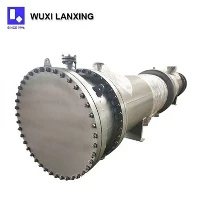
The type of refrigerant used in a heat exchanger for an air compressor can have a profound impact on its performance, efficiency, and overall lifespan. As a reliable provider of high - quality heat exchangers for air compressors, including Copper Tube Heat Exchanger, Hydraulic Oil Cooler, Tube Bundle Heat Exchangers, Alloy Steel Tubular Heat Exchanger, and Shell and Tube Heat Exchanger for Oil, I have witnessed firsthand how different refrigerants can shape the operation of these crucial components.
Thermal Conductivity and Heat Transfer Efficiency
One of the most significant factors influenced by the refrigerant type is the thermal conductivity, which directly affects the heat transfer efficiency of the heat exchanger. Refrigerants with high thermal conductivity are better at transferring heat from the air compressor to the cooling medium. For instance, some modern synthetic refrigerants are engineered to have excellent thermal properties. When a heat exchanger uses such a refrigerant, it can quickly absorb the heat generated by the air compressor and transfer it to the surrounding environment or a secondary fluid.
As a supplier, we often note that customers using heat exchangers with high - conductivity refrigerants experience faster cooling rates for their air compressors. This means that the compressor can operate at lower temperatures, reducing the risk of overheating and potential damage to the internal components. In contrast, refrigerants with poor thermal conductivity require more time and energy to transfer the same amount of heat. This inefficiency can lead to longer cooling cycles, increased energy consumption, and ultimately, higher operating costs for the end - user.
Compatibility with Heat Exchanger Materials
Refrigerants must also be compatible with the materials used in the construction of the heat exchanger. Different heat exchangers, such as Copper Tube Heat Exchanger and Alloy Steel Tubular Heat Exchanger, are made from various metals and alloys. Some refrigerants may react chemically with certain materials, causing corrosion or degradation over time.
For example, if a refrigerant is highly acidic or contains aggressive chemical compounds, it can corrode copper tubes in a heat exchanger. This corrosion not only weakens the structural integrity of the heat exchanger but also reduces its heat transfer efficiency as the corroded surface acts as an insulator. On the other hand, when a compatible refrigerant is used, the heat exchanger can maintain its performance and durability over a long period. As a supplier, we always provide detailed information about the refrigerant compatibility of our heat exchangers to ensure that our customers make the right choices.
Environmental Impact and Regulations
In recent years, environmental concerns have become a major driving force in the selection of refrigerants for heat exchangers. Many traditional refrigerants, such as chlorofluorocarbons (CFCs) and hydrochlorofluorocarbons (HCFCs), have been found to have a high ozone - depletion potential (ODP) and a significant global warming potential (GWP). As a result, strict regulations have been implemented to phase out the use of these harmful refrigerants.
Newer, environmentally friendly refrigerants, such as hydrofluorocarbons (HFCs) with low GWP and natural refrigerants like carbon dioxide (CO₂) and ammonia (NH₃), are being increasingly adopted. When a heat exchanger uses an environmentally friendly refrigerant, it not only helps the end - user comply with regulations but also enhances their corporate social responsibility. As a supplier, we are committed to promoting the use of sustainable refrigerants in our heat exchangers and providing products that meet the latest environmental standards.
System Pressure and Compressor Performance
The type of refrigerant also affects the operating pressure of the heat exchanger system. Different refrigerants have different saturation pressures at a given temperature. A refrigerant with a high saturation pressure will require the heat exchanger and the associated compressor to operate at higher pressures. This can put additional stress on the compressor and other components of the system.
If the compressor is not designed to handle the high pressure of a particular refrigerant, it may experience reduced efficiency, increased wear and tear, and a higher risk of failure. On the other hand, using a refrigerant with an appropriate pressure range for the compressor can optimize its performance and extend its service life. As a supplier, we work closely with our customers to understand their compressor specifications and recommend the most suitable refrigerant - heat exchanger combination.
Cost - effectiveness
Cost - effectiveness is another important aspect influenced by the refrigerant type. The initial cost of the refrigerant itself can vary significantly depending on its type, availability, and production process. Some high - performance synthetic refrigerants may be more expensive than traditional ones. However, it's essential to consider the long - term costs, including energy consumption, maintenance, and potential replacement costs.
A more expensive refrigerant with high efficiency can lead to significant energy savings over time, offsetting its initial cost. Additionally, a refrigerant that is less likely to cause corrosion or system failures can reduce maintenance and replacement costs. As a supplier, we analyze the cost - effectiveness of different refrigerant - heat exchanger combinations for our customers to help them make economically viable decisions.
Performance in Different Operating Conditions
The performance of a heat exchanger can also vary depending on the operating conditions, and the refrigerant type plays a crucial role in this regard. For example, in extreme hot or cold environments, some refrigerants may perform better than others. Refrigerants with a wide operating temperature range can ensure stable heat transfer performance regardless of the external temperature.
In areas with high ambient temperatures, a refrigerant that can maintain efficient heat transfer at elevated temperatures is essential. Similarly, in cold climates, a refrigerant that does not freeze or lose its effectiveness at low temperatures is required. As a heat exchanger supplier, we test our products with different refrigerants under various operating conditions to ensure that our customers can get reliable performance in any environment.
Impact on System Design and Size
The choice of refrigerant can also influence the design and size of the heat exchanger. Refrigerants with different thermophysical properties require different heat exchanger designs to achieve optimal performance. For example, a refrigerant with a low heat capacity may require a larger heat exchanger to transfer the same amount of heat compared to a refrigerant with a high heat capacity.
A well - designed heat exchanger takes into account the specific characteristics of the refrigerant to ensure efficient heat transfer and compact system design. As a supplier, we have the expertise to design heat exchangers tailored to the specific refrigerant requirements of our customers, providing them with solutions that are both effective and space - saving.


Conclusion
In conclusion, the type of refrigerant used in a heat exchanger for an air compressor has a far - reaching impact on its performance, efficiency, durability, and cost - effectiveness. As a trusted heat exchanger supplier, we understand the complexity of these relationships and are dedicated to providing our customers with the best possible solutions. We offer a wide range of high - quality heat exchangers, including Copper Tube Heat Exchanger, Hydraulic Oil Cooler, Tube Bundle Heat Exchangers, Alloy Steel Tubular Heat Exchanger, and Shell and Tube Heat Exchanger for Oil, that are designed to work optimally with different refrigerants.
If you are in the market for a heat exchanger for your air compressor or have any questions regarding the refrigerant - heat exchanger combination, we encourage you to contact us for a detailed consultation. Our team of experts is ready to assist you in making the right choice for your specific needs.