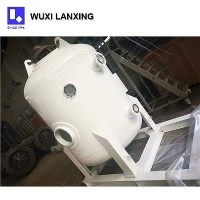
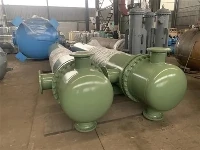
If you've ever walked into a chemical plant, a pharmaceutical lab, or a manufacturing facility that handles gases, liquids, or other substances under pressure, you've seen pressure vessels-those robust, often cylindrical tanks that keep hazardous materials contained safely. As a pressure vessel supplier, I get asked all the time: how do you make sure these vessels don't fail? The answer lies in strict design codes that have been refined over decades to balance safety, performance, and compliance. Skipping these codes isn't just a mistake-it's a risk to workers, the environment, and the bottom line. Let's break down what these design codes are, why they matter, and how they shape every vessel we build here.
First, it's important to understand that pressure vessel design isn't a "one-size-fits-all" job. Every vessel is tailored to its intended use: whether it's storing compressed air for a factory's pneumatic tools, holding corrosive chemicals at high temperatures, or reacting materials to make life-saving drugs. That's why we offer custom storage tanks, built to meet the specific needs of each client, instead of forcing them to fit a pre-made model. But before we even pick up a welding rod, we start with the core design codes that govern pressure vessels worldwide.
The most widely recognized set of standards comes from the American Society of Mechanical Engineers (ASME). The ASME Boiler and Pressure Vessel Code (BPVC) is the gold standard in the U.S. and adopted in over 100 countries. It's split into multiple sections, each covering a different type of vessel or component. Section VIII, Divisions 1 and 2, apply to pressure vessels that hold non-nuclear, non-boiling water pressure, and these are the codes we follow for almost every custom project we take on. Let's dive into what that means.
Section VIII, Division 1 (often called "old VIII") is the most common framework for basic pressure vessels. It lays out rules for material selection, thickness calculations, welding procedures, testing, and inspection. For example, when designing a pressure vessel that will hold high-pressure compressed air for a manufacturing plant, we use Division 1 to calculate the minimum wall thickness needed to withstand the operating pressure without failing. We also choose materials based on the substance inside: if it's air, we might use carbon steel for durability and cost-effectiveness, but if it's a corrosive chemical, we'll opt for stainless steel or alloy steel to prevent rust or degradation. That's where our expertise comes in-we don't just follow the code; we adapt it to the specific contents of your vessel, whether that's a standard air tank or a specialized chemical reactor.
Section VIII, Division 2 (or "alternate VIII") is a more stringent set of rules for vessels that operate at higher pressures or use more critical materials. It allows for more efficient designs-thinner walls in some cases-because it uses more advanced mathematical modeling and testing to prove safety. For clients needing a high-pressure compressed air tank, Division 2 might be the better choice, as it ensures the tank can handle extreme pressure without adding unnecessary weight or cost. We recently worked with a logistics company that needed air storage for a fleet of electric truck charging stations, and using Division 2 let us build a tank that was 15% lighter than a Division 1 design, while still meeting all safety requirements. That kind of efficiency is why so many industrial clients turn to us for their pressure vessel needs.
Beyond ASME codes, there are regional standards that come into play depending on where the vessel will be used. In the European Union, the Pressure Equipment Directive (PED) sets rules for safety, design, and manufacturing. It requires that any pressure vessel operating above a certain pressure threshold undergo third-party testing to ensure compliance. For clients in Europe, we align our designs with both ASME and PED to avoid delays in installation. In Canada, the Canadian Standards Association (CSA) B51 standard covers pressure vessels, and in many Asian countries, their own national codes mirror ASME or PED. As a global supplier, we've mastered all these standards, so you don't have to worry about navigating complicated regional requirements-we handle the compliance from start to finish.
But design codes aren't just about numbers and rules; they're about safety. One of the most important parts of any pressure vessel design is the "design pressure" and "design temperature." These are not the same as the operating pressure and temperature you'll use every day. The code requires us to add a safety margin-usually 10-25%-to account for fluctuations in operation, unexpected spikes in pressure, or changes in environmental conditions. For example, if a client wants a pressure vessel storage tank to hold liquid nitrogen at -196°C, we set the design temperature to be 10% lower than that, so if the tank is exposed to a slightly colder outdoor temperature during shipping or storage, it won't fail. That margin is what prevents catastrophic accidents, and it's non-negotiable in every design we do.
Another critical aspect is material testing. The code requires that every metal used in a pressure vessel be tested for strength, ductility, and resistance to corrosion. We source our materials from certified suppliers, and each batch comes with a material test report (MTR) that proves it meets the code's specifications. For example, when we build a jacketed chemical reactor-used in pharmaceuticals to control reaction temperatures-we use two layers of stainless steel: an inner layer that resists corrosion from the chemicals inside, and an outer layer that holds the heating or cooling fluid. We test both layers to make sure they can handle the pressure difference between the inner reaction chamber and the outer jacket, which is a common failure point if not done correctly. No matter how complex the vessel, we follow the code's testing procedures to ensure every part is up to par.
Welding is also heavily regulated by design codes. The ASME code requires that all welders working on pressure vessels be certified, and every weld must be inspected for defects like cracks, porosity, or incomplete penetration. We use non-destructive testing (NDT) methods like ultrasonic testing and radiography to check every weld, so we can catch issues before the vessel leaves our shop. For a horizontal chemical storage tank, which needs to hold large volumes of liquid under pressure, even a small weld defect can lead to leaks or failure. That's why we take welding so seriously-every joint is tested, every welder is skilled, and every step is documented for compliance.
Inspection and certification are the final pieces of the design code puzzle. Once a vessel is built, it has to go through a series of tests to prove it meets the code's requirements. The most common test is a hydrostatic test, where we fill the vessel with water and pressurize it to 1.5 times the design pressure. This puts the vessel under extreme stress to make sure it doesn't leak, bulge, or crack. Some vessels also undergo pneumatic testing, using air instead of water, for applications where water can't be used (like for vessels that hold flammable liquids). After passing these tests, the vessel gets a code stamp-like the ASME U stamp-that proves it's compliant. This stamp is non-negotiable; without it, you can't install the vessel in most industrial facilities, as regulators will reject it.
As a pressure vessel supplier, I've seen firsthand what happens when design codes are ignored. A few years back, we got a call from a small manufacturing company that had installed a homemade compressed air tank. It had been built without following any design codes, and after a year of use, it developed a crack and started leaking. The company was lucky no one was hurt, but they had to shut down their operations for weeks while they replaced it. That's why we emphasize to every client: design codes aren't red tape-they're your protection. When you work with a reputable supplier who follows these codes, you're not just buying a tank; you're buying peace of mind.
But design codes also need to adapt to new technologies. Over the past decade, we've seen advances in materials like high-strength alloys and composite materials, which allow for lighter, more efficient pressure vessels. The ASME code has updated its sections to include these new materials, and we've invested in training our team to design with them. For example, when a client needed a storage tank for a renewable energy project that used hydrogen, we worked with the updated ASME rules for high-strength alloys to build a tank that was half the weight of a traditional steel tank, while still meeting all safety requirements for storing flammable hydrogen. This kind of innovation is only possible because the design codes evolve with technology, and we stay on top of those changes to offer the best solutions to our clients.

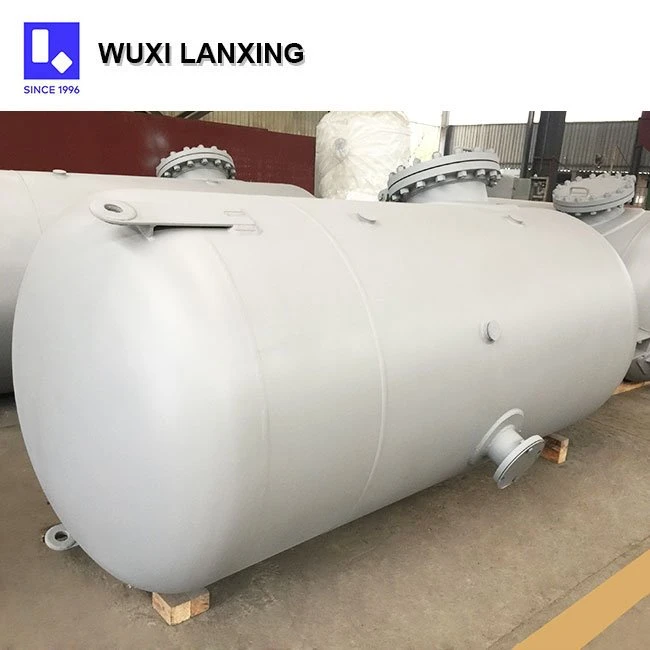
Now, you might be wondering: how do I know which pressure vessel is right for my project? That's where our team comes in. We don't just sell you a standard tank; we work with you to understand your specific needs-what you'll be storing, at what pressure and temperature, your facility's space constraints, and any regional regulations. For example, if you're a food and beverage company needing a tank to store carbonated drinks, we'll use a food-grade stainless steel tank that follows ASME and FDA standards. If you're a chemical plant needing a jacketed reactor for batch processing, we'll design it to meet ASME Section VIII requirements, with the right thickness and material to handle your chemicals. We have options for every need, from small custom storage tanks to large-scale industrial vessels, all built to comply with the latest design codes.
If you're in the market for a pressure vessel, don't settle for anything less than code-compliant. Choosing a supplier that follows ASME, PED, and other relevant codes is the best way to ensure safety, avoid costly delays, and get a vessel that will last for decades. Our team has years of experience designing and building pressure vessels for a wide range of industries, and we're here to help you every step of the way-from initial design to final installation.
Ready to discuss your pressure vessel needs, get a quote, or learn more about how our code-compliant designs can benefit your operations? Reach out to our team to start the conversation. We look forward to helping you find the perfect pressure vessel solution.