
Hey there! As a supplier of shell and tube type heat exchangers, I'm super stoked to share with you all the amazing advantages of these bad boys. These heat exchangers are a staple in various industries, and for good reason. Let's dive right in and check out what makes them so great.
1. High Heat Transfer Efficiency
One of the biggest perks of shell and tube type heat exchangers is their high heat transfer efficiency. The design consists of a bundle of tubes enclosed within a shell. The hot and cold fluids flow through the tubes and the shell respectively (or vice versa), and the large surface area provided by the tubes allows for efficient heat exchange between the two fluids.
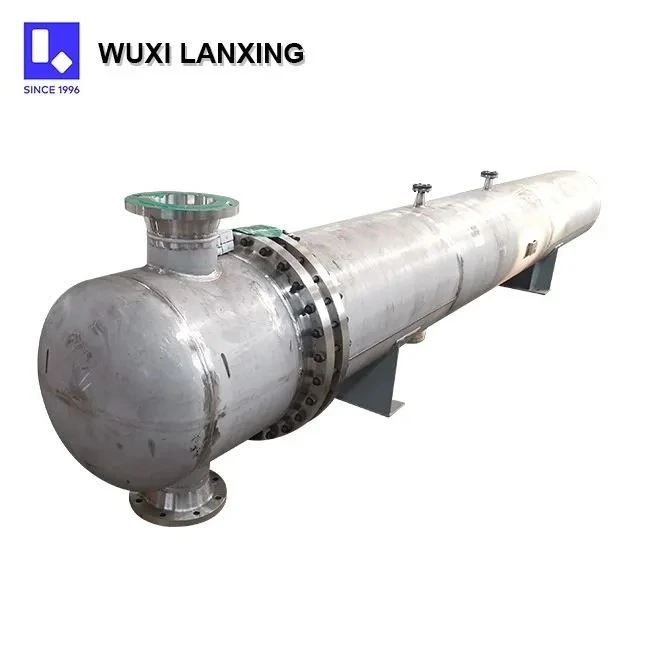

Think about it like this: when you want to cool down a hot drink quickly, you'd pour it into a wide, shallow dish rather than a narrow glass. The larger the surface area exposed to the cooler air, the faster the drink cools. The same principle applies here. The numerous tubes in the heat exchanger offer a substantial surface area for heat to transfer from the hot fluid to the cold one. This means that you can achieve the desired temperature change in a shorter amount of time and with less energy input.
For industries that require a large amount of heat transfer, like chemical processing or power generation, this high efficiency is a game - changer. It can lead to significant cost savings in the long run, as less energy is needed to achieve the same results.
2. Versatility
Shell and tube heat exchangers are incredibly versatile. They can handle a wide range of fluids, including liquids, gases, and even multi - phase mixtures. Whether you're dealing with water, oil, steam, or some exotic chemical compound, these heat exchangers can get the job done.
In addition, they can operate under a variety of conditions. They can withstand high pressures and temperatures, which makes them suitable for use in demanding industrial environments. For example, in the oil and gas industry, where fluids are often transported at high pressures and temperatures, shell and tube heat exchangers are commonly used to cool or heat the fluids as needed.
You can also customize the design of shell and tube heat exchangers to meet specific requirements. For instance, you can choose different tube materials, such as stainless steel, copper, or titanium, depending on the properties of the fluids and the operating conditions. You can also adjust the number, diameter, and length of the tubes to optimize the heat transfer performance.
If you're interested in a tube bundle heat exchanger for liquids and gases, you can check out Tube Bundle Heat Exchanger for Liquids and Gases. This product showcases the versatility of our shell and tube heat exchangers in handling different types of fluids.
3. Durability
These heat exchangers are built to last. The robust construction of the shell and tube design can withstand the rigors of continuous operation in harsh industrial environments. The tubes are usually made of high - quality materials that are resistant to corrosion, erosion, and high temperatures. For example, stainless steel tubes are commonly used because they are strong and have good corrosion resistance, which is essential when dealing with corrosive fluids.
The shell also provides a protective enclosure for the tubes, shielding them from external damage. This durability means that you won't have to replace the heat exchanger as often, saving you money on replacement costs. Additionally, it reduces the downtime associated with equipment failure, which is crucial for industries where continuous operation is essential.
4. Easy Maintenance
Maintenance is a breeze with shell and tube heat exchangers. Since the tubes are bundled together, it's relatively easy to access and clean them. If a tube gets blocked or damaged, it can be easily removed and replaced without having to replace the entire heat exchanger.
Regular maintenance, such as cleaning the tubes to remove fouling (the build - up of deposits on the tube surfaces), can significantly improve the heat transfer efficiency and extend the lifespan of the heat exchanger. And because the design is relatively simple, maintenance engineers can quickly diagnose and fix any problems that may arise.
5. Adaptability to Different Flow Configurations
Shell and tube heat exchangers offer a lot of flexibility when it comes to flow configurations. You can have parallel flow, counter - flow, or cross - flow arrangements, depending on your specific heat transfer requirements.
In a parallel flow configuration, the hot and cold fluids enter the heat exchanger at the same end and flow in the same direction. This is useful in some applications where a relatively small temperature change is required.
Counter - flow, on the other hand, is the most efficient flow configuration. In counter - flow, the hot and cold fluids enter the heat exchanger at opposite ends and flow in opposite directions. This allows for the maximum temperature difference between the two fluids along the length of the heat exchanger, resulting in higher heat transfer rates.
Cross - flow configurations are used when one fluid is a gas and the other is a liquid. The gas flows across the tubes, while the liquid flows through the tubes. This configuration can be very effective in applications such as air - conditioning and refrigeration.
6. Cost - effectiveness
When you consider all the advantages mentioned above, it's clear that shell and tube type heat exchangers are a cost - effective option. The high heat transfer efficiency reduces energy consumption, which translates into lower operating costs. The durability and easy maintenance mean that you'll spend less on replacement parts and maintenance labor over the long term.
Moreover, their versatility allows them to be used in a wide range of applications, so you don't have to invest in multiple types of heat exchangers for different processes.
We also offer a variety of models to suit different budgets. For example, our Air Compressor Heat Exchanger and Gas Cooling Heat Exchanger are designed to provide efficient heat transfer at a reasonable cost.
7. Compatibility with Other Equipment
Shell and tube heat exchangers can be easily integrated with other equipment in a system. They can work in tandem with pumps, valves, and other components to form a complete heat transfer system. This compatibility makes them a popular choice in many industrial processes.
For example, in a chemical plant, a shell and tube heat exchanger can be connected to a reactor to cool the reaction products. The heat exchanger can be sized and configured to match the flow rate and temperature requirements of the reactor, ensuring smooth operation of the entire process.
8. Safety
Safety is always a top priority in industrial applications, and shell and tube heat exchangers are designed with safety in mind. The robust construction and reliable sealing of the shell and tubes prevent leakage of fluids, which is crucial when dealing with hazardous or expensive substances.
In addition, the heat exchanger can be equipped with various safety features, such as pressure relief valves and temperature sensors, to prevent over - pressure and over - temperature situations. This helps to protect the equipment and the personnel working in the area.
There are also different types of shell and tube heat exchangers available to further meet your needs. For example, our U Tube Heat Exchanger is a popular choice due to its unique design and performance characteristics. And if you're looking for a compact and efficient option, our Copper Brazed Plate Heat Exchanger might be just what you need.
In conclusion, the advantages of shell and tube type heat exchangers are numerous. From high heat transfer efficiency to durability, versatility, and cost - effectiveness, they offer a great solution for a wide range of industrial heat transfer applications. If you're in the market for a heat exchanger and want to learn more about how our shell and tube heat exchangers can benefit your business, we'd love to talk with you. Get in touch with us to start a discussion about your specific requirements and see how we can provide you with the best heat exchanger solution.


