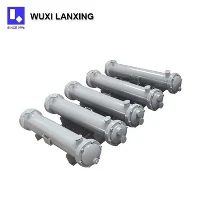
Hey folks, if you've ever worked with U-tube and shell heat exchangers, you know they're workhorses in so many industries-from oil and gas to chemical processing, even power generation. As a guy who's been supplying these bad boys for over a decade, I've seen first-hand how corrosion can creep in and turn a perfectly good heat exchanger into a money pit. One minute it's running smooth, the next you're dealing with leaky tubes, pressure drops, or even full-on system shutdowns that cost way more than fixing corrosion upfront. Today, I'm walking you through exactly how to protect a U-tube and shell heat exchanger from corrosion, no fancy jargon (well, just enough to get the job done) and tips I've picked up working side-by-side with clients around the world.
First off, let's make sure we're on the same page about what a U-tube and shell heat exchanger even is, because that's key to tackling its corrosion weaknesses. Unlike fixed tubesheet heat exchangers where both ends of the tubes are glued (welded, actually) into a single tubesheet, U-tube models have tubes bent into a U-shape-so one end is free to move, which is perfect for handling thermal expansion (super important when you've got big temperature swings). If you're curious about other tubular styles, check out the Tubular Heat Exchanger page on our site-we've got everything from straight-tube fixed types to those heat pump plate heat exchangers for HVAC, but U-tubes are our bread and butter for high-heat, high-pressure jobs. Now, here's the thing: that U-shape, while great for expansion, creates some hidden corrosion hot spots. Let's break down where corrosion usually hits first.


The number one culprit I see? Water-related corrosion, specifically in the shell side and tube side. Most U-tube exchangers are used to transfer heat between two fluids-one goes through the tubes, one through the shell. If the tube side fluid is water, especially untreated water, you get things like pitting corrosion, where tiny holes eat through the tube walls over time. The shell side is even trickier, because it's where debris and sediment love to settle-those stagnant areas become breeding grounds for microbial corrosion (think bacteria that produce acids, literally eating away at metal). I once had a client in the oil and gas space who skipped treating their shell side water, and within 18 months they had 20% of their U-tubes leaking. That's why Shell and Tube Heat Exchanger In Oil and Gas Industry guide? It's got specific corrosion tips tailored to that sector, which is brutal because of the salt and other contaminants in process fluids.
Next up: material selection. This isn't a "one size fits all" game. A lot of guys just go with carbon steel because it's cheap, but if you're working with corrosive fluids, that's a mistake. Let's talk tube materials first. If you're dealing with mild water, maybe copper-nickel (CuNi) alloys work-they're cheaper than stainless steel and hold up decently. But for harsher stuff, like saltwater or acidic process fluids, you need 316L stainless steel, or even duplex stainless steel for super corrosive environments. The shell? Carbon steel is standard, but you've got to line it if the shell side is corrosive-something like epoxy or rubber lining can add years of life. Wait, and don't forget the U-bend itself! Because of that curved shape, it's often harder to get proper coating or treatment on the inside. I've seen clients try to skip treating the U-bends, only to find that's where 70% of their corrosion starts. Pro tip: when spec'ing your U-tube exchanger, ask your supplier if they do inner tube surface treatments-like passivation for stainless steel, which removes free iron and makes the metal more resistant to rust.
Then there's water treatment, and I can't stress this enough-even if you have the best materials, bad water will corrode your exchanger faster than anything. Let's keep it simple, no overcomplicating. For the tube side, if it's freshwater, you need to control pH (shoot for 8.0-8.5, that's sweet spot), add corrosion inhibitors, and regularly test for things like chloride ions (chloride is the #1 enemy of stainless steel-it causes pitting). For the shell side, you need to prevent sediment buildup. Flushing the shell regularly might sound like a hassle, but it's way cheaper than replacing tubes. Some of our clients use recirculating systems with filters to catch debris before it settles. And don't sleep on biocides! Microbes love stagnant shell side water, so a monthly dose of mild biocide will stop that microbial corrosion in its tracks. I had a client who was fighting microbial corrosion, switched to monthly shock doses, and cut their tube replacement rate by 80% in a year. Game changer.
Another big one: thermal expansion and stress, which actually accelerates corrosion. Remember how U-tube exchangers have that free end? The U-bend expands and contracts with temperature changes, and if that movement is restricted, you get stress cracks. Those cracks act like highways for corrosive fluids-they get in, and corrosion spreads way faster. How to fix this? Make sure your exchanger is installed with enough clearance so the free end can move. Also, regularly inspect the U-bends for stress cracks-maybe do a non-destructive test (like ultrasonic testing) every 2-3 years, especially if you're running high temperatures. I once had a client who skipped inspections, and a stress crack on a U-bend led to a full tube rupture-shutdown cost them $50k in lost production, way more than the inspection would have.
Coatings and linings-again, targeted to the parts that need it. The tubes: if you've got mild corrosion risks, an internal epoxy coating can help, but make sure it's a food-grade or industrial-grade epoxy compatible with your process fluid. For the shell, if it's carbon steel, a full rubber lining or epoxy coating on the inner surface will prevent direct contact between metal and corrosive fluid. Wait, but don't coat the U-bends too thick-thick coatings can crack when the tube bends or expands, leaving gaps where corrosion can sneak in. I've seen that mistake a few times: a client coated the entire tube, and after a year, the U-bend coating cracked, and corrosion started there. So when coating, be precise-only coat the straight sections, leave the U-bend inner surface bare (but treated, like passivated) so it can move and expand without cracking.
Cathodic protection is another tool in the toolbox, especially for exchangers in water or saltwater environments. This works by making the heat exchanger the "cathode" of an electrochemical cell, so corrosion happens to a sacrificial anode (like zinc or magnesium) instead of the exchanger metal. For shell and tube exchangers, you can use either impressed current cathodic protection (for larger systems) or sacrificial anodes (for smaller ones). Just make sure you size the anodes right-too small, and they burn out fast; too big, and they waste money. Our team helps clients size cathodic protection systems all the time, so don't be afraid to ask for help if you're not sure.
Now, let's talk about regular maintenance and inspections-this is non-negotiable. You can't just install an exchanger and forget about it. I tell all my clients to do a monthly walkthrough: check pressure gauges for drops (a drop might mean a blocked tube or corrosion), listen for weird noises (rumbling might mean sediment buildup or cavitation), and visually inspect the shell for leaks. Every 1-2 years, do a more thorough inspection: take a few tube samples, check for pitting or thinning, use ultrasonic testing to measure tube wall thickness (if the wall is 10% thinner than original, you need to replace that tube). And for U-bends specifically, since they're curved, they're harder to inspect-maybe use a borescope to get a look inside the U-bend area. I've had clients catch corrosion in U-bends during inspections and replace a few tubes, instead of dealing with a full shutdown later.
Wait, and let's not compare apples to oranges here-like, if your application is better served by another exchanger type, don't force a U-tube. For example, if you need to clean tubes frequently, fixed tubesheet heat exchangers might be easier, because you can pull the tubesheet and access the entire bundle. But if thermal expansion is a big issue, U-tube is the way to go. And if you're dealing with refrigerant or HVAC, the heat pump plate heat exchangers are super efficient. That's why it's important to pick the right exchanger for your application from the start-saving a few bucks on the wrong type will cost you in corrosion and downtime later.
Let me give you a real example to drive this home. A client in the chemical processing industry came to me two years ago, complaining that their U-tube exchanger was leaking every 12 months. They were using carbon steel tubes, untreated shell side water, and skipped inspections. We worked with them to upgrade to 316L stainless steel tubes, add epoxy lining to the shell, set up a monthly water treatment schedule, and do semi-annual inspections. Two years later, their exchanger hasn't had a single leak. They saved over $100k in replacement and downtime costs in that time. That's exactly why these tips work-they're not just theory, they're what I see with my own clients.
Now, I know this might sound like a lot, but it's manageable. The key is to be proactive, not reactive. Corrosion doesn't happen overnight-it's a slow process, and if you catch it early, you can fix it without big costs. The worst thing you can do is ignore small leaks or pressure drops, because they'll turn into major issues fast.
If you're looking to upgrade your current U-tube and shell heat exchanger, or need a new one spec'ed out for a corrosive environment, we're here to help. We don't just sell equipment-we work with you to pick the right materials, suggest corrosion protection solutions, and even provide maintenance checklists tailored to your application. Whether you're in oil and gas, chemical processing, or any other industry that needs reliable heat transfer, reach out to our team to chat through your needs. We're always happy to help fellow operators avoid the headache of corrosion.