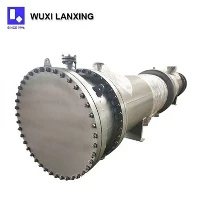
A shell and tube heat exchanger is a widely used device in various industrial applications, designed to transfer heat between two fluids efficiently. One of the critical components in a shell and tube heat exchanger is the tube support plate. This component plays a crucial role in maintaining the structural integrity of the tubes, preventing vibration-induced damage, and ensuring proper fluid distribution. As a leading Shell and Tube Type Heat Exchanger supplier, we understand the importance of well - designed tube support plates. In this blog, we will discuss how to design the tube support plates in a shell and tube heat exchanger.
Understanding the Function of Tube Support Plates
Tube support plates are installed at regular intervals along the length of the tubes in a shell and tube heat exchanger. Their primary functions include:
- Mechanical Support: They hold the tubes in place, preventing them from sagging or buckling under their own weight, the weight of the fluid inside, and external forces.
- Vibration Damping: Tubes are subject to vibrations caused by fluid flow. Tube support plates reduce these vibrations, which can otherwise lead to tube failure due to fatigue.
- Fluid Distribution: By maintaining proper tube spacing, they help in achieving a uniform flow of the shell - side fluid around the tubes, enhancing heat transfer efficiency.
Design Considerations
1. Material Selection
The choice of material for tube support plates is crucial. It should be compatible with both the tube material and the fluids in the heat exchanger. Common materials include carbon steel, stainless steel, and non - ferrous metals such as brass and aluminum.
- Carbon Steel: It is cost - effective and has good mechanical strength. However, it is prone to corrosion, so it may require proper coating or lining if used in corrosive environments.
- Stainless Steel: Offers excellent corrosion resistance, making it suitable for a wide range of applications. It is more expensive than carbon steel but provides long - term durability.
- Non - ferrous Metals: Such as brass and aluminum, are used in applications where corrosion resistance and light weight are important. They also have good thermal conductivity.
2. Tube Pattern and Spacing
The tube pattern and spacing on the support plate significantly affect the heat transfer and pressure drop in the heat exchanger.
- Tube Patterns: The most common tube patterns are triangular and square. Triangular patterns provide a higher tube density, which increases the heat transfer area per unit volume. Square patterns are easier to clean and are preferred when fouling is a concern.
- Tube Spacing: Adequate tube spacing is necessary to ensure proper fluid flow around the tubes. The minimum tube spacing is usually determined by the tube diameter, the type of fluid, and the desired heat transfer rate. A larger tube spacing reduces the pressure drop but may also decrease the heat transfer efficiency.
3. Hole Size and Tolerance
The holes in the tube support plates are designed to accommodate the tubes. The hole size should be slightly larger than the tube outer diameter to allow for easy insertion of the tubes. The tolerance of the hole size is also important. A too - large tolerance can lead to tube vibration, while a too - small tolerance can make tube installation difficult. The typical tolerance for hole size is in the range of ±0.1 - 0.3 mm, depending on the tube diameter and the application requirements.
4. Thickness of the Support Plate
The thickness of the tube support plate is determined by the mechanical loads it needs to withstand. Factors such as the tube length, the number of tubes, and the fluid pressure in the shell and tubes affect the required thickness. Generally, thicker support plates provide better mechanical support but increase the cost and weight of the heat exchanger. A structural analysis is often carried out to determine the appropriate thickness.
Design Process
1. Determine the Operating Conditions
Before starting the design, it is essential to understand the operating conditions of the heat exchanger. This includes the inlet and outlet temperatures and pressures of both the shell - side and tube - side fluids, the flow rates, and the properties of the fluids such as density, viscosity, and thermal conductivity.
2. Select the Tube and Shell Dimensions
Based on the heat transfer requirements and the operating conditions, select the appropriate tube diameter, length, and number of tubes. The shell diameter is then determined to accommodate the tubes and the required shell - side fluid flow.
3. Choose the Tube Pattern and Spacing
As mentioned earlier, the tube pattern and spacing depend on factors such as heat transfer efficiency, fouling potential, and pressure drop requirements. Consider the trade - offs between these factors when making the selection.
4. Calculate the Hole Size and Tolerance
Based on the tube outer diameter, calculate the appropriate hole size and tolerance. Refer to industry standards and guidelines to ensure the accuracy of the design.
5. Determine the Thickness of the Support Plate
Perform a structural analysis to calculate the required thickness of the tube support plate. Consider the mechanical loads, such as the weight of the tubes and the fluid pressure, as well as the vibration forces.


6. Check for Compatibility
Ensure that the material of the tube support plate is compatible with the tube material and the fluids. Compatibility issues can lead to corrosion, which can reduce the lifespan of the heat exchanger.
Our Product Offerings
As a Shell and Tube Type Heat Exchanger supplier, we offer a wide range of heat exchangers with well - designed tube support plates. Our products include Water Cooled Evaporator Shell and Tube Heat Exchanger, Aluminum Fin Heat Exchanger, Stainless Steel Filter, Copper Tube Heat Exchanger, and Tube Bundle Heat Exchangers. We use advanced design and manufacturing techniques to ensure the high quality and performance of our products.
Contact for Purchase
If you are interested in our shell and tube heat exchangers or need more information about the design of tube support plates, we encourage you to contact us for a purchasing discussion. Our team of experts is ready to provide you with professional advice and solutions tailored to your specific needs.