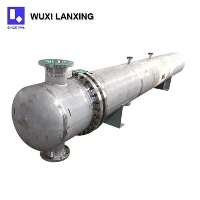
Hey there! As a supplier of shell and tube type heat exchangers, I often get asked about how often these bad boys should be cleaned. It's a crucial question because proper maintenance can keep your heat exchanger running smoothly and efficiently for years to come.
Factors Affecting Cleaning Frequency
Let's start by looking at the factors that play a role in determining how often you need to clean your shell and tube heat exchanger.
Water Quality
The quality of the water running through your heat exchanger is a biggie. If you're using water with a high level of impurities like sediment, minerals, or biological matter, it's gonna build up inside the tubes and on the shell surface over time. This buildup, known as fouling, can reduce the heat transfer efficiency and increase the pressure drop across the exchanger. For example, if you're using water from a well or a river, you might need to clean your heat exchanger more frequently compared to using municipal water that has been treated.
Operating Conditions
The way you operate your heat exchanger also matters. If it's running at high temperatures or high flow rates, it can cause the fouling to occur more quickly. High temperatures can lead to the precipitation of minerals, while high flow rates can cause erosion and carry more debris into the exchanger. On the other hand, if your heat exchanger is running under more moderate conditions, the fouling rate will be slower.


Type of Fluid
The type of fluid being used in the heat exchanger can have a significant impact on the cleaning frequency. Some fluids, like certain chemicals or oils, can leave behind sticky residues or form deposits that are difficult to remove. For instance, if you're using a heat exchanger to cool a process fluid that contains polymers or heavy metals, you'll likely need to clean it more often.
General Guidelines for Cleaning Frequency
Based on my experience as a supplier, here are some general guidelines for how often you should clean your shell and tube heat exchanger:
Light Fouling Conditions
If you're dealing with relatively clean water and normal operating conditions, you might be able to get away with cleaning your heat exchanger once or twice a year. This is usually the case for applications where the water source is treated and the heat exchanger is not subjected to extreme temperatures or flow rates.
Moderate Fouling Conditions
For applications with moderately dirty water or slightly more challenging operating conditions, cleaning every 3 - 6 months is a good idea. This could include situations where the water has a moderate level of minerals or where the heat exchanger is running at higher temperatures.
Severe Fouling Conditions
In cases where the water is very dirty or the fluid being used is prone to fouling, you might need to clean your heat exchanger monthly or even more frequently. This could be the situation in industrial processes where the water contains a lot of suspended solids or in applications where the heat exchanger is used to cool a fluid with a high fouling potential.
Importance of Regular Cleaning
Now, you might be wondering why it's so important to clean your shell and tube heat exchanger regularly. Well, here are a few reasons:
Improved Efficiency
As I mentioned earlier, fouling can reduce the heat transfer efficiency of your heat exchanger. When the tubes and shell are covered in deposits, it becomes harder for the heat to transfer from one fluid to the other. This means that your heat exchanger has to work harder to achieve the same level of performance, which can lead to higher energy consumption and increased operating costs. By cleaning your heat exchanger regularly, you can keep it running at peak efficiency and save money on energy bills.
Extended Lifespan
Regular cleaning can also help extend the lifespan of your heat exchanger. When fouling builds up, it can cause corrosion and erosion of the tubes and shell. This can weaken the structure of the heat exchanger and lead to leaks or other failures. By removing the fouling on a regular basis, you can prevent these issues from occurring and keep your heat exchanger in good working condition for longer.
Reduced Downtime
A fouled heat exchanger can cause problems with your process, leading to downtime and lost production. If the heat exchanger is not working properly, it can affect the temperature and flow rate of the fluids in your system, which can have a cascading effect on other parts of your process. By cleaning your heat exchanger regularly, you can minimize the risk of downtime and keep your production running smoothly.
Different Types of Heat Exchangers and Cleaning
We offer a variety of shell and tube heat exchangers, each with its own cleaning requirements.
Water Cooled Heat Exchanger Shell Tube
Water cooled heat exchangers are commonly used in many applications. Since they use water as the cooling medium, the quality of the water is crucial. If the water is hard or contains a lot of impurities, it can cause scaling inside the tubes. Regular cleaning of these heat exchangers is essential to prevent scaling and maintain efficient heat transfer.
Copper Tube Heat Exchanger
Copper tube heat exchangers are known for their excellent heat transfer properties. However, copper can be susceptible to corrosion, especially in the presence of certain chemicals or high levels of oxygen in the water. Cleaning these heat exchangers regularly can help remove any corrosion products and prevent further damage to the tubes.
Silicon Carbide Shell and Tube Heat Exchanger
Silicon carbide heat exchangers are highly resistant to corrosion and can handle high temperatures and aggressive chemicals. While they are more durable, they still need to be cleaned to remove any fouling that may occur over time. The cleaning process for silicon carbide heat exchangers may be different from other types, so it's important to follow the manufacturer's recommendations.
Cleaning Methods
There are several methods for cleaning shell and tube heat exchangers, and the choice of method depends on the type and severity of the fouling.
Mechanical Cleaning
Mechanical cleaning involves using tools like brushes, scrapers, or high - pressure water jets to physically remove the fouling from the tubes and shell. This method is effective for removing hard deposits and is often used for severe fouling situations.
Chemical Cleaning
Chemical cleaning uses chemicals to dissolve the fouling. The choice of chemical depends on the type of fouling. For example, acids can be used to remove scale, while alkaline solutions can be used to remove organic deposits. Chemical cleaning is often used for lighter fouling or as a follow - up to mechanical cleaning.
Online Cleaning
Online cleaning methods allow you to clean the heat exchanger while it's still in operation. This can be done using techniques like automatic tube cleaning systems, which use brushes or sponges to clean the tubes continuously. Online cleaning can help reduce downtime and keep the heat exchanger running efficiently.
Contact Us for Your Heat Exchanger Needs
If you're in the market for a shell and tube heat exchanger or need advice on maintenance and cleaning, we're here to help. We have a wide range of heat exchangers to suit different applications and budgets. Our team of experts can assist you in choosing the right heat exchanger for your needs and provide you with detailed information on cleaning and maintenance.
Don't hesitate to reach out to us for a consultation. We can help you ensure that your heat exchanger is operating at its best and that you're getting the most out of your investment.