
Hey there! As a pressure vessel supplier, I've seen firsthand how the shape of a pressure vessel can have a huge impact on its performance. In this blog, I'm gonna break down the different shapes and how they affect various aspects of a pressure vessel's functionality.
Let's start with the most common shapes: cylindrical, spherical, and ellipsoidal. Each of these shapes has its own unique characteristics, and understanding them can help you choose the right pressure vessel for your specific needs.
Cylindrical Pressure Vessels
Cylindrical pressure vessels are probably the most widely used type. You can find them in all sorts of industries, from chemical processing to food and beverage. Why are they so popular? Well, one of the main reasons is their simplicity. They're relatively easy to manufacture, which keeps the cost down.
In terms of performance, cylindrical vessels are great for handling pressure. The circular cross - section distributes the internal pressure evenly around the circumference. This even distribution reduces stress concentrations, which is super important because it means the vessel can withstand higher pressures without failing.
However, cylindrical vessels do have a bit of a drawback. The ends of the cylinder are the weak points. To counter this, we usually attach hemispherical or ellipsoidal heads to the cylinder. This helps to better distribute the pressure at the ends and makes the whole vessel more structurally sound.
If you're looking for a reliable and cost - effective option, our ASME Stainless Steel Pressure Vessel is a great choice. It's made of high - quality stainless steel and has the classic cylindrical shape with well - designed heads to ensure optimal performance.
Spherical Pressure Vessels
Spherical pressure vessels are like the superheroes of pressure containment. A sphere is the most efficient shape when it comes to withstanding internal pressure. The pressure is distributed evenly across the entire surface of the sphere. This means that for a given volume and pressure, a spherical vessel requires less material compared to a cylindrical one.
Because of their efficient pressure distribution, spherical vessels can handle extremely high pressures. They're often used in applications where high - pressure storage is needed, like in the oil and gas industry for storing compressed gases.

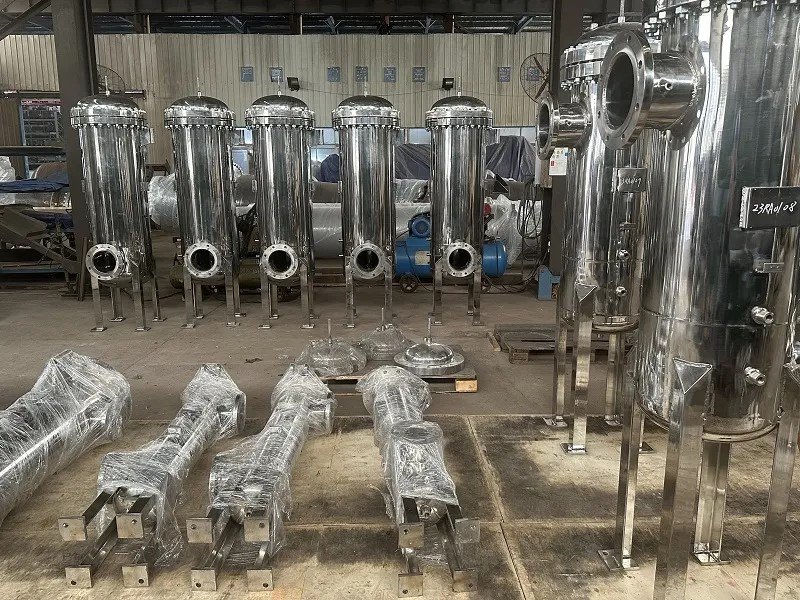
But there's a catch. Spherical vessels are more difficult and expensive to manufacture. The curved surface requires more precise fabrication techniques, and it can be challenging to fit them into existing spaces. Despite the higher cost, if you need a vessel for high - pressure applications, a spherical vessel is worth considering. Check out our Excellent Quality ASME Industrial High Pressure Vessel, which is designed to meet the toughest high - pressure requirements.
Ellipsoidal Pressure Vessels
Ellipsoidal pressure vessels are a bit of a compromise between cylindrical and spherical vessels. They have a more rounded shape compared to cylindrical vessels, which helps in better pressure distribution. The elliptical shape is often used for the heads of cylindrical vessels, but stand - alone ellipsoidal vessels are also used in some applications.
One of the advantages of ellipsoidal vessels is that they can be more space - efficient than spherical vessels. They can fit into areas where a full sphere might not be practical. At the same time, they offer better pressure - handling capabilities than a simple cylindrical vessel.
Our ASME Stainless Steel Storage Tanks are available in ellipsoidal shapes. They're ideal for storing liquids and gases at moderate pressures while making the most of the available space.
Impact on Flow and Mixing
The shape of a pressure vessel also affects the flow and mixing of fluids inside. In a cylindrical vessel, the straight walls can cause a more laminar flow, which might be suitable for applications where a smooth, controlled flow is needed. For example, in a chemical process where you want to maintain a specific reaction rate, a cylindrical vessel can help keep the flow stable.
On the other hand, spherical vessels promote better mixing. The curved surface causes the fluid to circulate in a more turbulent way, which is great for applications where you need to mix different components thoroughly. This is especially important in industries like pharmaceuticals and food production.
If you need a vessel for chemical reactions, our Stainless Steel Chemical Reactor and Glass Lined Chemical Reactor come in various shapes to suit your specific mixing and reaction requirements.
Maintenance and Inspection
The shape of a pressure vessel can also impact maintenance and inspection. Cylindrical vessels are relatively easy to access and inspect. The straight walls allow for straightforward visual inspections and the installation of inspection ports. Maintenance tasks like cleaning and repair are also more manageable.
Spherical vessels, however, can be more challenging to maintain. The curved surface makes it harder to reach all areas of the vessel during inspection and repair. Specialized equipment might be needed to access the inner parts of a spherical vessel.
Ellipsoidal vessels fall somewhere in between. They're easier to maintain than spherical vessels but may have some of the same challenges as cylindrical vessels depending on their size and design.
Safety Considerations
Safety is always a top priority when it comes to pressure vessels. The shape plays a crucial role in ensuring the safety of the vessel. A well - designed shape that distributes pressure evenly reduces the risk of stress fractures and failures.
Cylindrical vessels with appropriate heads are generally very safe. The heads help to prevent stress concentrations at the ends, which can lead to leaks or ruptures. Spherical vessels are also inherently safe due to their even pressure distribution, but proper manufacturing and installation are essential.
We always make sure that all our pressure vessels meet the highest safety standards. Whether you choose a cylindrical, spherical, or ellipsoidal vessel, you can be confident that it will perform safely and reliably.
Conclusion
So, as you can see, the shape of a pressure vessel has a significant impact on its performance, cost, flow characteristics, maintenance, and safety. When choosing a pressure vessel, it's important to consider your specific requirements, such as the pressure level, the type of fluid or gas to be stored, the available space, and your budget.
If you're in the market for a pressure vessel, we're here to help. We have a wide range of options in different shapes and sizes to meet your needs. Whether it's a simple cylindrical vessel for a small - scale operation or a high - pressure spherical vessel for an industrial application, we've got you covered.
Reach out to us for more information and let's start a conversation about your pressure vessel needs. We can provide you with detailed specifications, pricing, and answer any questions you might have. Don't hesitate to contact us and see how we can help you find the perfect pressure vessel.


